Four stages from mother plant to grower.
Tissue culture moves through four standard stages. We use the same notation throughout this site — so you always know which step of the work we are talking about.
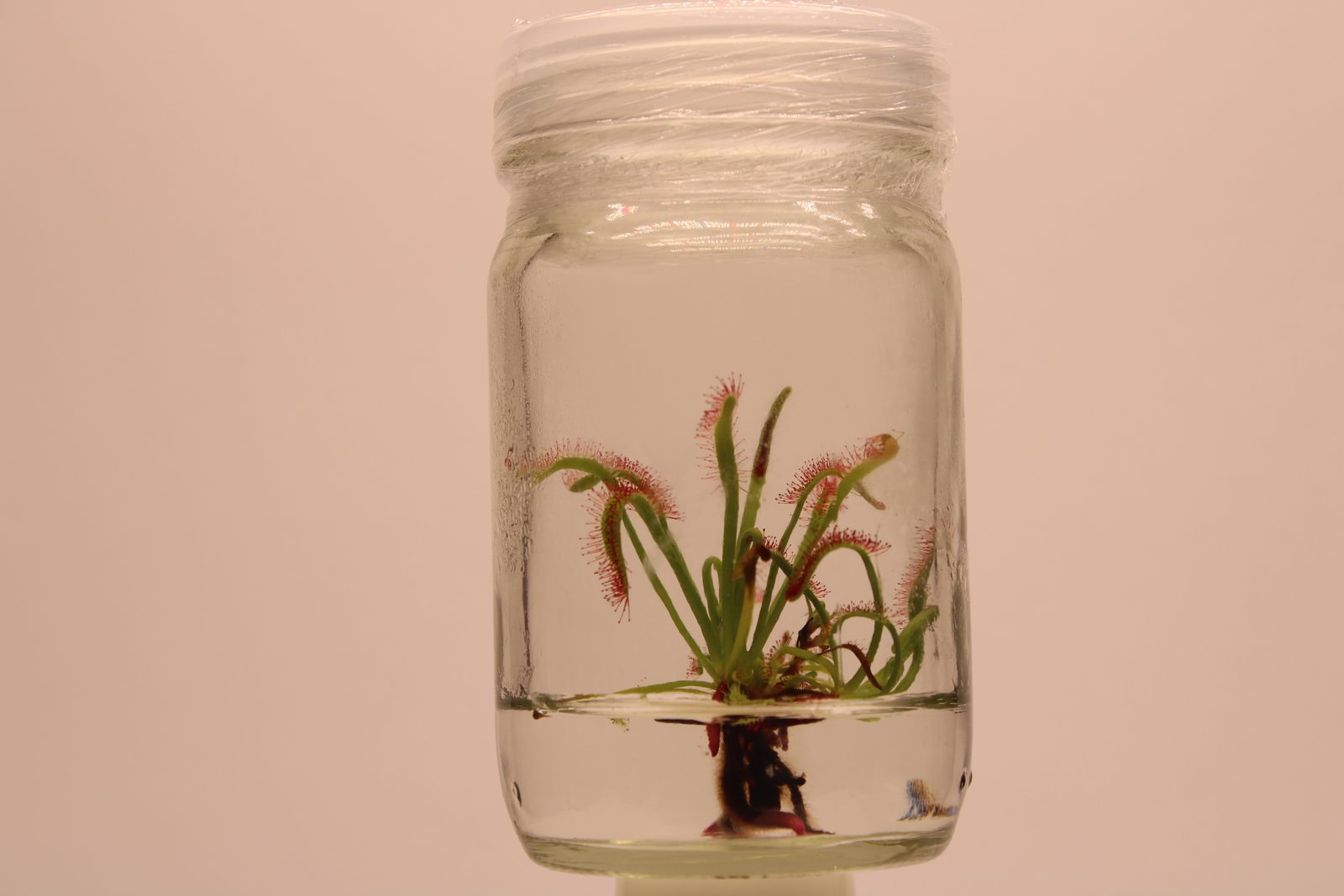
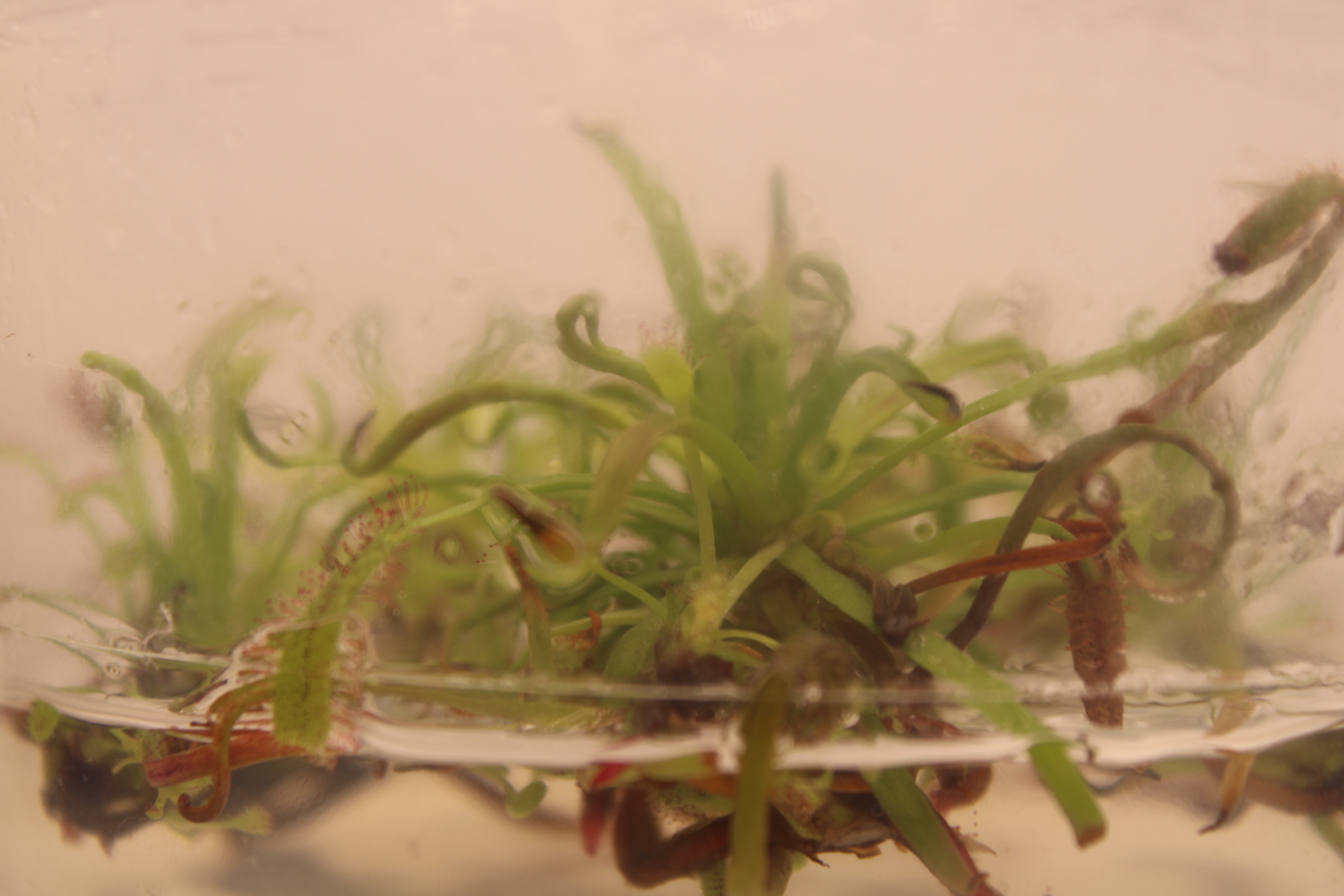
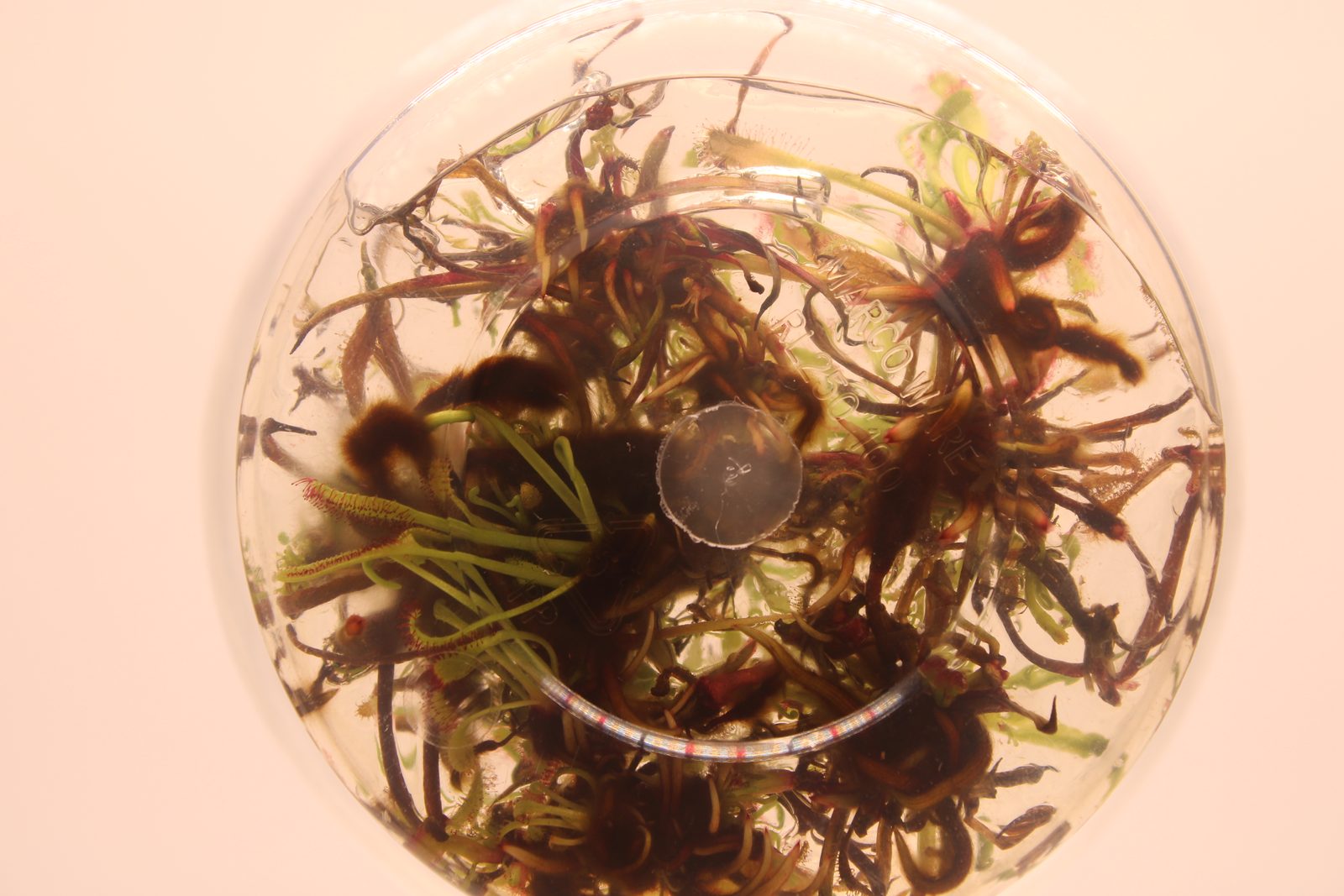
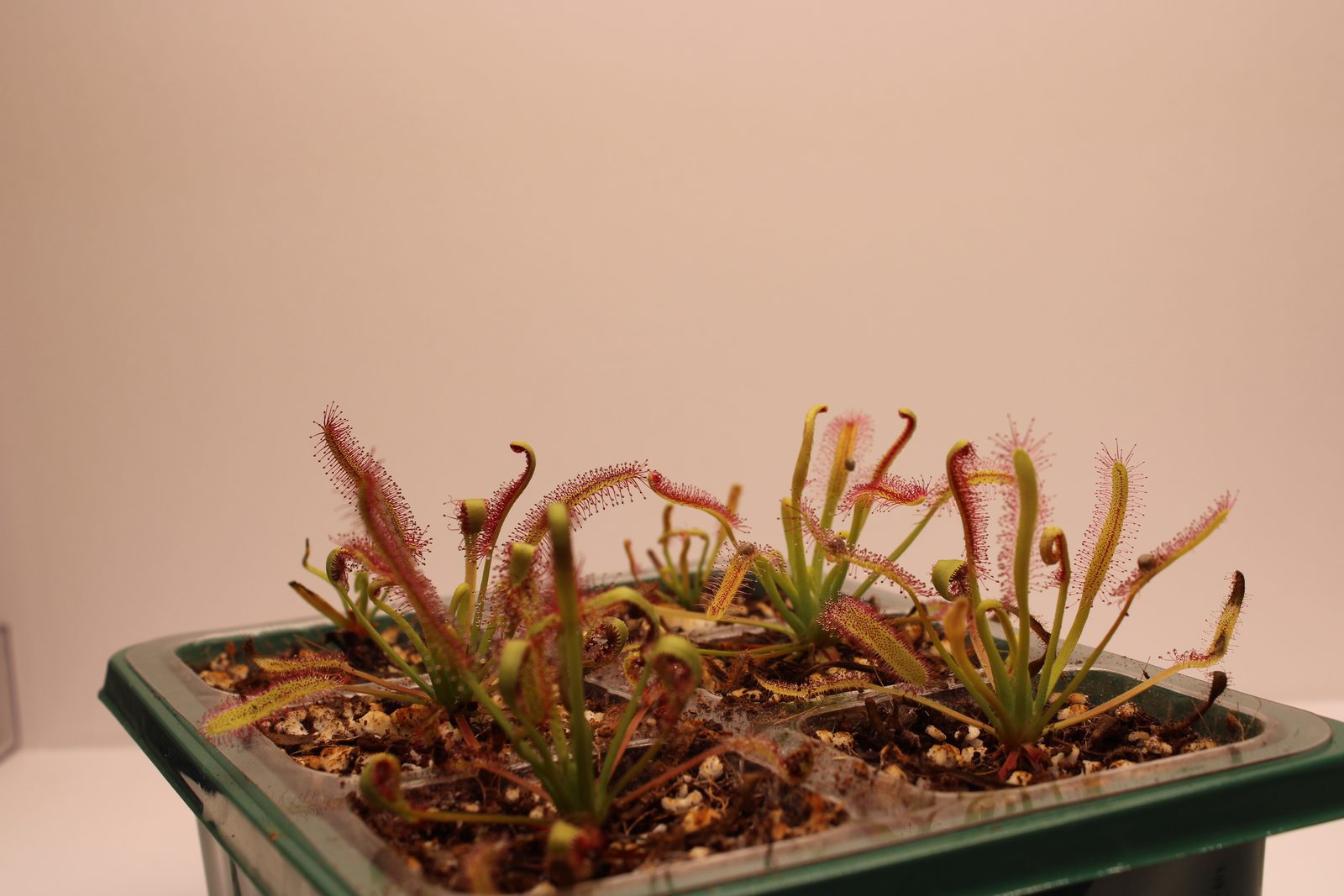
Establishment
A sterilised explant settles onto nutrient medium and starts to grow. From here the plant lives entirely in vitro — clean, sealed, contamination-free.
Multiplication
One vessel becomes many. The clean line is sub-cultured every few weeks to build the volume you need.
Rooting
Shoots move to a rooting medium and put out a white, branching root system — the plantlet is ready to leave the vessel.
Hardening
Deflasked, washed, and weaned to ambient humidity over weeks. What you receive is a real, growing plant — not a lab curiosity.
-
Stage I
Establishment
A small piece of healthy explant — often a leaf section, node, or apical meristem — is taken from a chosen mother plant. It is washed, surface-sterilised, and placed onto sterile nutrient medium inside a sealed vessel.
This step takes one to four weeks. If the explant survives surface sterilisation, stays free of contamination, and begins to grow, the culture is considered established. From this point forward, the plant lives entirely in vitro.
-
Stage II
Multiplication
The established culture is moved onto a multiplication medium — typically Murashige & Skoog base with a calibrated cytokinin (commonly BAP) to encourage shoot proliferation. Every four to six weeks, the cultures are sub-cultured: divided up and transferred onto fresh medium.
One vessel becomes several. Several become dozens. Dozens become hundreds. This is where the multiplication rate is built, and the discipline of clean handling is everything.
-
Stage III
Rooting
Once enough shoots exist, individual plantlets are transferred to a rooting medium — typically with reduced cytokinin and a calibrated auxin (IBA or NAA) to trigger root development. This stage takes two to four weeks.
A successful Stage III plantlet has a visible, white, branching root system and is ready to leave the sterile vessel.
-
Stage IV
Acclimatisation
The rooted plantlet has spent its life under 100% humidity, sterile conditions, and constant temperature. It now needs to learn to live in the real world.
Plantlets are washed free of medium, transplanted into a sterile, well-draining substrate, and held in a high-humidity environment that is gradually opened to ambient conditions over two to six weeks. This is the most fragile stage — we provide acclimatisation guidance with every order.
The facility.
Suiwerkweek operates as a small dedicated tissue culture facility. Work is carried out under a still air box with strict aseptic protocol, with cultures maintained under controlled LED lighting and temperature.
Media are prepared from research-grade Murashige & Skoog salts and vitamins, with PGR stock solutions prepared gravimetrically and dosed by volume. Every subculture event is documented against a batch record.
How long from your mother plant to my field?
The honest answer: it depends on the species, but here is a realistic range for a typical project. These timelines refer to species we already have in active rotation. New contract species take longer — see our services page for a full breakdown.
6 – 10 weeks
For species already in our active rotation. We take an order, scale the multiplication, root the plantlets, and dispatch.
10 – 16 weeks
Species we have not actively cultured but for which a literature protocol exists. Includes initial establishment time.
3 – 6 months
Species without a documented protocol. Includes media trials, hormone calibration, and stabilisation of a clonal line.
4 – 6 weeks
Once a line is established and rotating, follow-up batches at regular intervals.