A small lab with serious standards.
Suiwerkweek is a working plant tissue culture laboratory in Centurion, Gauteng. We do the technical, patient work of starting plants from a few millimetres of healthy tissue — and growing them into clean, uniform young plants ready for the field, the tunnel, or the collector's shelf.
The work, in plain terms.
Plant tissue culture (sometimes called micropropagation) starts with a small piece of a chosen mother plant. We sterilise it, place it onto a sterile nutrient gel — typically Murashige & Skoog medium with carefully calibrated plant growth regulators — and let it multiply, shoot, and root under controlled light and temperature.
What comes out at the other end is a flask, jar, or tray of small, genetically identical, disease-free young plants. From one well-chosen mother, hundreds. From a year of patient subculture, thousands.
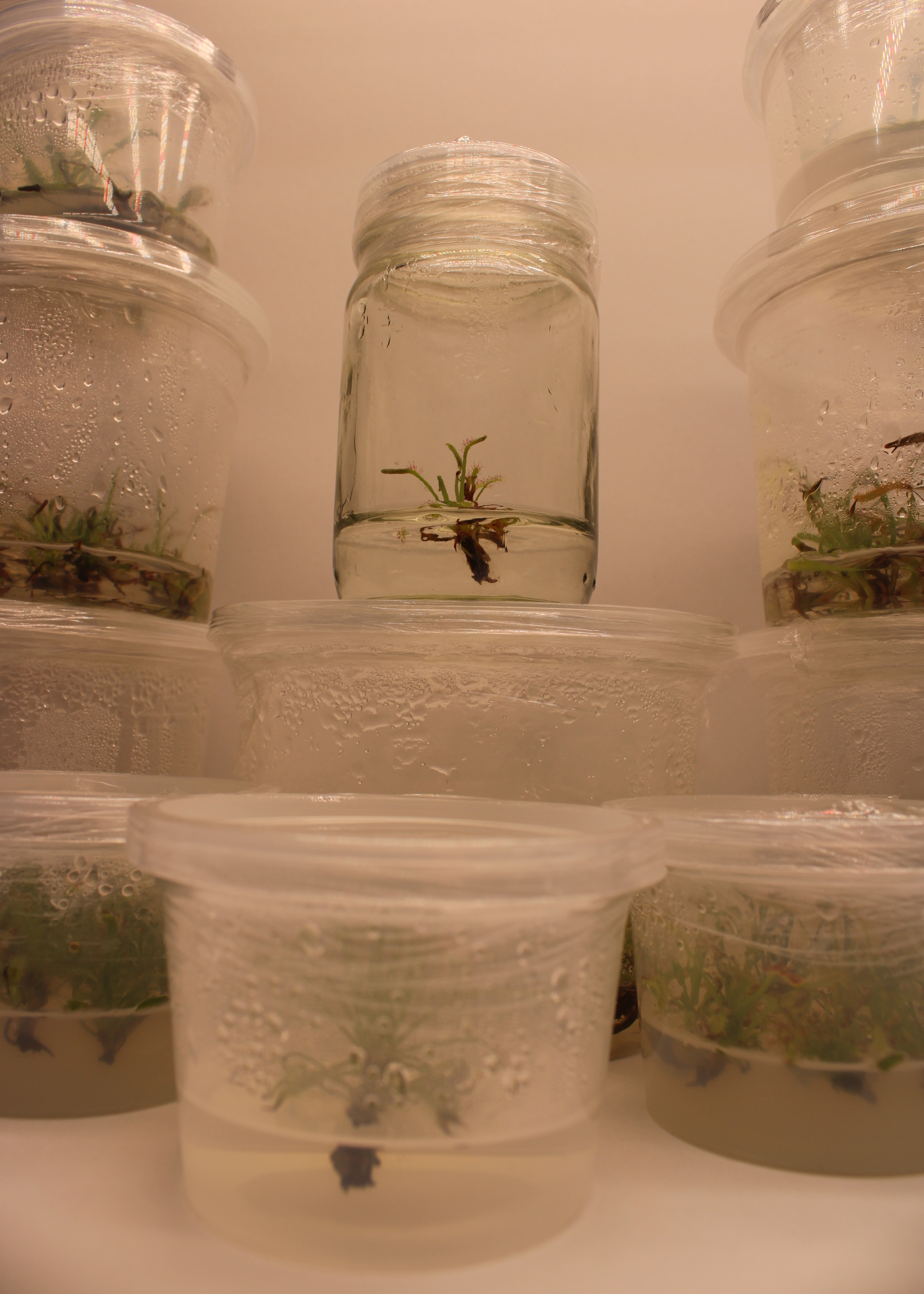 D. capensis · mature culture
Clean genetics make stronger crops.
Three things separate a tissue-cultured plant from one started by cuttings or seed.
Disease-free from day one
Plants started in sterile lab conditions are free of the viruses, fungi, and pests that travel silently in field stock. That alone changes yield trajectories.
Genetically identical
Every plant in a batch carries the same genetics as the mother plant. No varietal drift, no surprise underperformers — predictable behaviour across the whole planting.
Scalable from one
From a single proven mother plant, we can build out the volume you need on a timeline that's faster than rooted cuttings and more predictable than seed-grown stock.
Preserved in the lab
Cultures can be held in slow-growth conditions as a living backup of your elite genetics — protected from fire, theft, flood, or pathogen outbreak in the field.
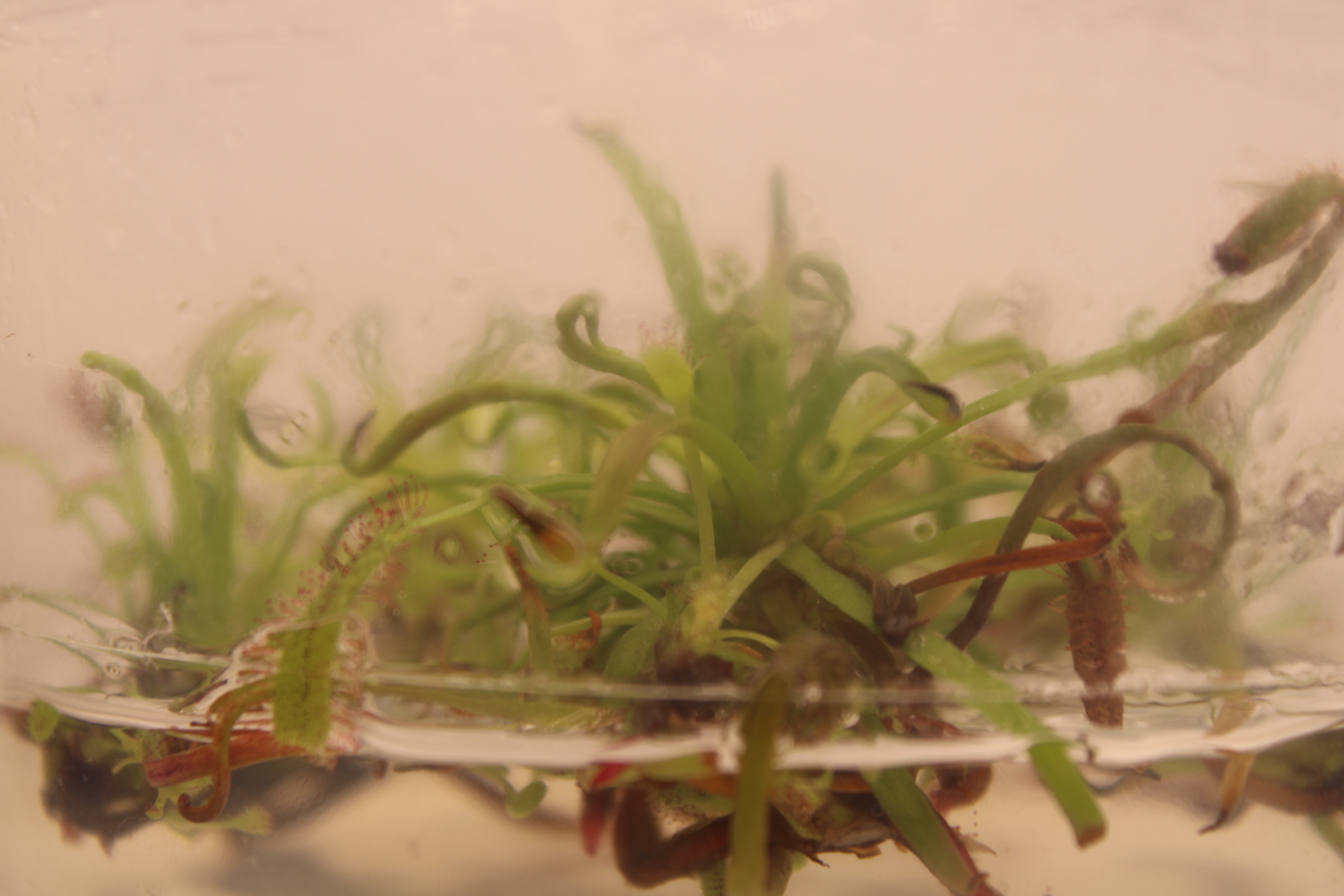 Ready to transfer · subculture day
A small lab can still be a serious one.
Suiwerkweek runs with the same protocol discipline a commercial laboratory does — surface sterilisation under laminar flow, autoclaved media, recorded subculture intervals, batch numbering, and contamination logging on every cycle.
We currently run under a 5% contamination rate per batch, which is in line with commercial laboratory benchmarks. We aim to keep it there as we scale.
What we don't do is overpromise. If a species is difficult, we tell you. If a protocol needs more time, we say so. The fastest way to ruin a season's planting is to ship plants that aren't ready.
Centurion, Gauteng.
The laboratory operates from Centurion, in the centre of Gauteng — placing us within a short drive of commercial growers in the province, easy courier reach for the rest of South Africa, and direct access to the major suppliers of laboratory consumables and clean water.